


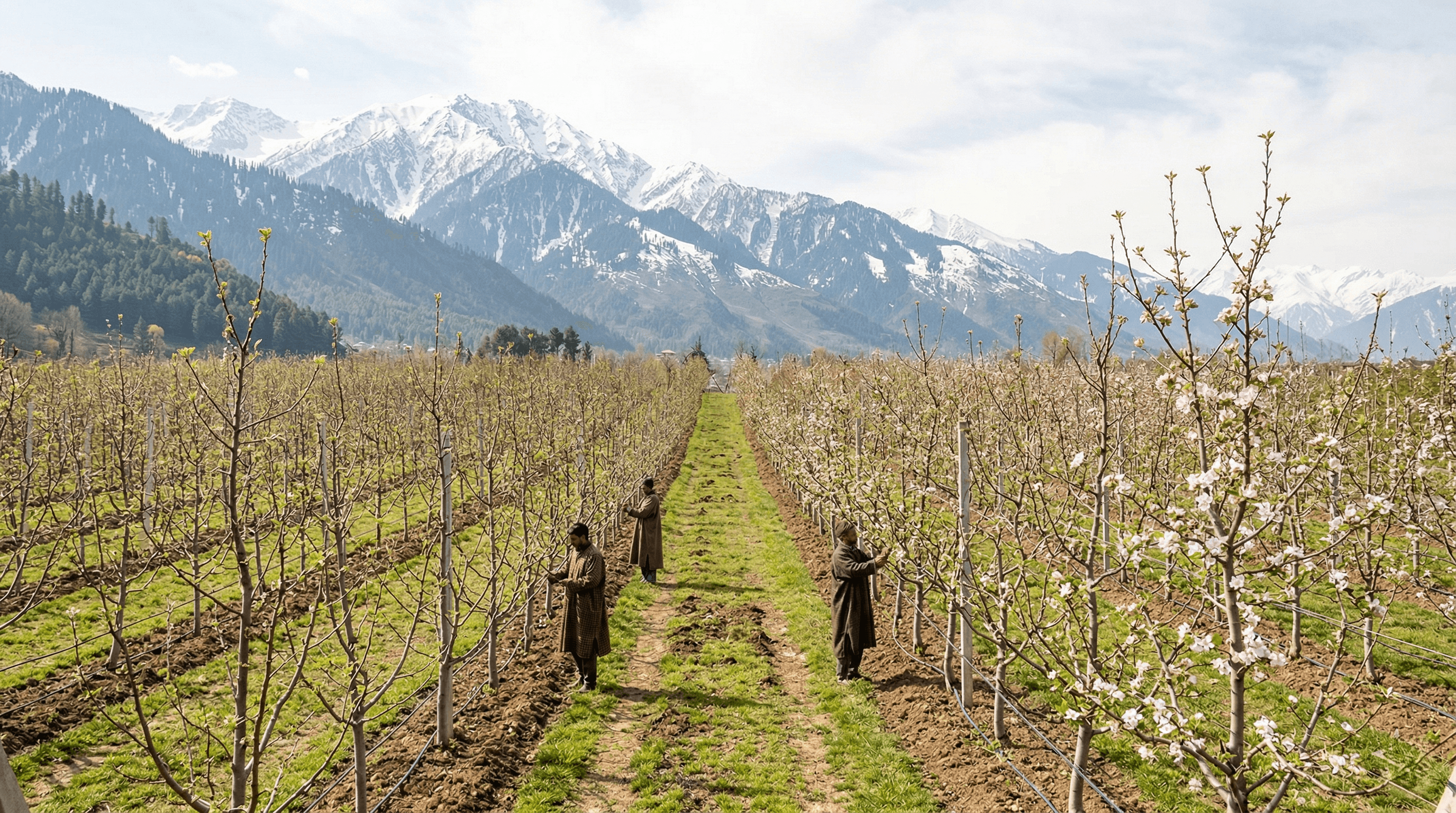
As apple trees transition from dormancy to active growth, early spring becomes one of the most decisive phases in orchard management. Physiological processes such as bud swelling, root activation, carbohydrate mobilization, and floral differentiation intensify during this period. Management interventions implemented before and during early spring directly influence flowering uniformity, fruit set, nutrient uptake efficiency, and overall orchard productivity.
A structured, science-based preparation strategy ensures that trees enter the growing season under optimal soil, structural, and phytosanitary conditions.
1. Orchard Sanitation: Reducing Overwintering Inoculum
Many economically significant apple pathogens and insect pests survive winter in fallen leaves, pruned wood, bark crevices, and mummified fruits. Early removal and destruction of infected debris reduces the primary inoculum load at the start of the season.
Shredding leaf litter or promoting its decomposition accelerates microbial breakdown and limits ascospore discharge in spring. Effective sanitation lowers disease pressure, reduces dependence on chemical interventions, and supports integrated pest management programs.
2. Dormant and Delayed Dormant Pruning
Pruning during late dormancy regulates canopy architecture and improves light interception. Proper canopy design enhances photosynthetic efficiency, promotes uniform bud development, and improves air circulation within the tree structure.
Removal of weak, shaded, crossing, and diseased branches reduces microclimatic humidity that favors pathogen development. In high-density orchards, maintaining a narrow canopy profile ensures better light distribution and improves fruit color and quality at harvest. Pruning intensity should be determined by tree vigor, rootstock characteristics, and the previous season’s crop load.
3. Soil Testing and Nutrient Management Planning
Early spring is the appropriate time to review soil analytical data before initiating fertilizer application. Soil testing provides quantitative information on pH, macro- and micronutrient levels, electrical conductivity, and organic carbon status.
Nutrient management programs must be tailored according to analytical results rather than generalized schedules. Balanced fertilization enhances nutrient-use efficiency, improves root absorption dynamics, and prevents long-term soil degradation. Strategic planning also ensures timely availability of required inputs during peak demand.
4. Soil pH Optimization
Soil reaction significantly influences nutrient solubility, microbial activity, and cation exchange processes. Apple orchards perform optimally within a moderately acidic to near-neutral pH range.
In acidic soils, liming materials increase base saturation and improve calcium availability. In alkaline conditions, elemental sulphur may be applied to gradually reduce soil pH through microbial oxidation processes. Because soil pH adjustment depends on buffering capacity, texture, and moisture conditions, correction should begin well in advance of peak nutrient uptake.
5. Organic Matter Enhancement
Incorporating well-decomposed farmyard manure or compost improves soil structure, aggregation, and porosity. Enhanced organic matter increases water-holding capacity and stimulates microbial biomass activity, leading to improved nutrient mineralization.
Maintaining adequate soil organic carbon contributes to long-term soil resilience, particularly in intensively managed high-density apple systems.
6. Irrigation System Inspection and Calibration
Uniform water distribution during early growth stages is critical for synchronized bud break and shoot elongation. Prior to the onset of active growth, irrigation systems should be inspected thoroughly.
Drip lines must be checked for blockages and leaks, filters cleaned, and pressure levels standardized to ensure uniform discharge. Early system maintenance prevents moisture stress during critical phenological stages.
7. Trellis and Structural Support Maintenance
Modern high-density orchards rely heavily on trellis systems for canopy support and load distribution. Early spring inspection of poles, anchors, and support wires is essential. Loose or damaged components should be repaired before flowering and fruit set, as structural failure during peak fruit load can result in significant yield loss.
8. Pest and Disease Monitoring
Monitoring should begin before visible symptom expression. Installation of pheromone traps, examination of bark crevices, and bud inspection provide early indicators of pest emergence.
Where necessary, dormant or delayed dormant sprays may be applied in accordance with integrated pest management principles. Timely intervention reduces the need for repeated applications later in the season.
9. Weed Management
Weeds emerging in late winter compete for nutrients and moisture as trees resume metabolic activity. Early mechanical or targeted control minimizes competition and ensures that soil resources are directed toward crop growth.
10. Equipment Servicing and Sprayer Calibration
Sprayers must be calibrated to deliver accurate dosages and uniform coverage. Nozzle condition, pump pressure, and spray patterns should be verified before application. Preventive servicing of tractors and related machinery avoids operational delays during flowering and fruit set, when timing is critical.
Conclusion
Early spring preparation integrates soil science, plant physiology, structural maintenance, and pest management into a coordinated management framework. Proactive sanitation, canopy regulation, nutrient planning, pH correction, irrigation readiness, and equipment calibration collectively enhance orchard efficiency and sustainability.
A scientifically informed approach during this transitional phase establishes the foundation for improved yield stability, superior fruit quality, and long-term orchard health.