


Introduction
Apple trees naturally grow in ways that don’t always match what growers want. Some branches grow too vigorously, while other parts of the tree remain bare because buds fail to develop into shoots. To control tree shape and improve fruit production, growers use techniques such as notching and nicking, which involve making small cuts near buds to influence how they grow. These techniques are especially useful in young apple trees where proper branch structure is still developing. When done correctly, they help create balanced growth, increase fruiting wood, and improve long-term productivity.
Apple trees have:
- Vegetative buds – produce leaves and shoots
- Flower buds – produce blossoms and fruit
Bud growth is controlled by plant hormones, especially auxins, which flow downward from the growing tip. This hormonal dominance suppresses the growth of lower buds, a phenomenon known as apical dominance. Notching and nicking manipulate this hormonal flow to either encourage or suppress growth at specific points.
What is Notching?
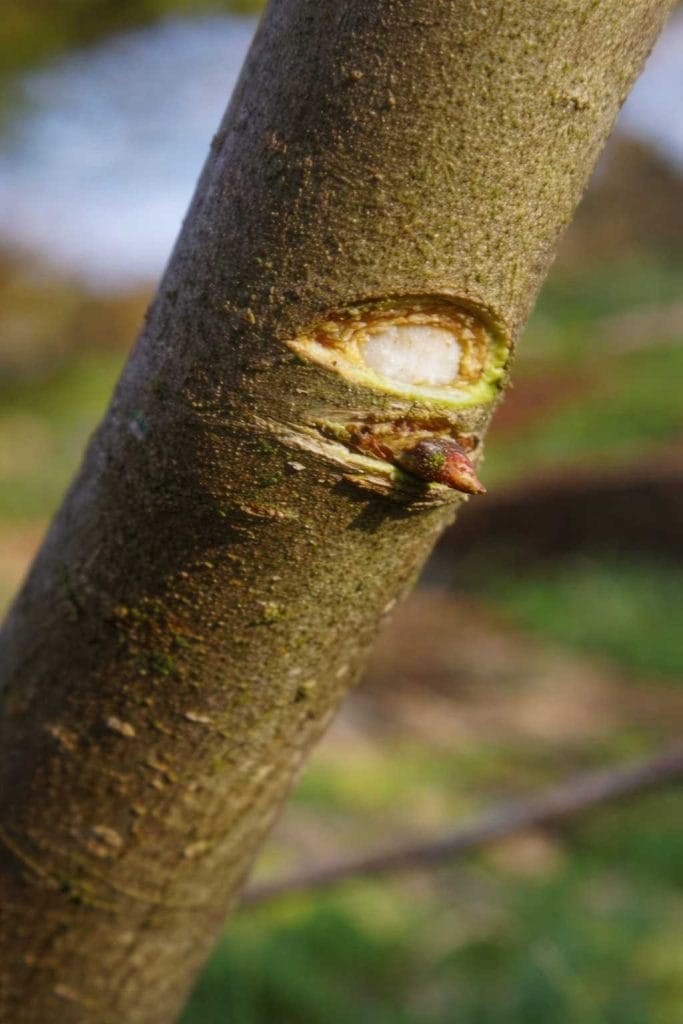
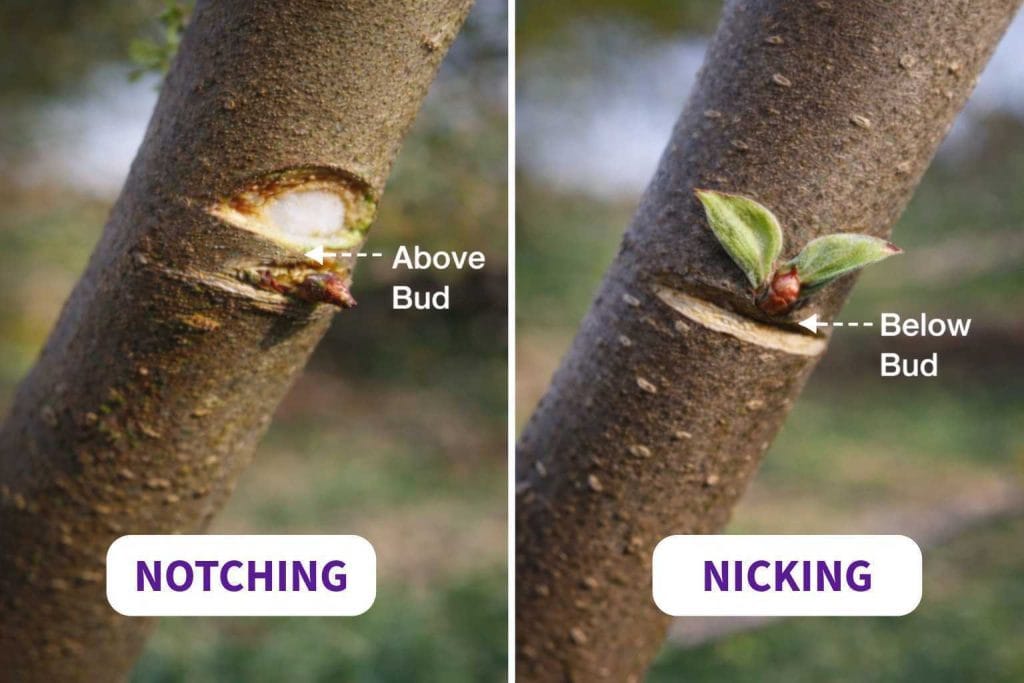
Notching is a technique where a small piece of bark and cambium is removed just above a bud to encourage it to grow into a new shoot.
Purpose of Notching:
- Stimulates dormant buds to grow
- Helps fill gaps in tree structure
- Encourages lateral branch development
- Improves canopy balance
By removing tissue above the bud, notching interrupts hormone flow from the top of the branch, allowing the bud to activate.
Timing
Green tip – Tight cluster, but can also be done 2 weeks after full bloom
How to Perform Notching?
- Identify a healthy dormant bud.
- Using a sharp knife, remove a 2-mm wide strip of bark above the bud without damaging the bud itself
- Avoid deep cuts that expose excessive wood.
Expected Results
- Bud begins growing into a lateral shoot within the growing season.
- Growth is typically moderate and controlled.
Effects on Plant Hormones
In notching, a small cut is made just above a bud, which interrupts the downward flow of auxin from the shoot tip. Since auxin normally suppresses the growth of lower buds, reducing its effect allows cytokinins from the roots to stimulate the bud, leading to the development of a new lateral shoot. As a result, notching encourages branching and helps fill empty spaces in the tree canopy.
What is Nicking?
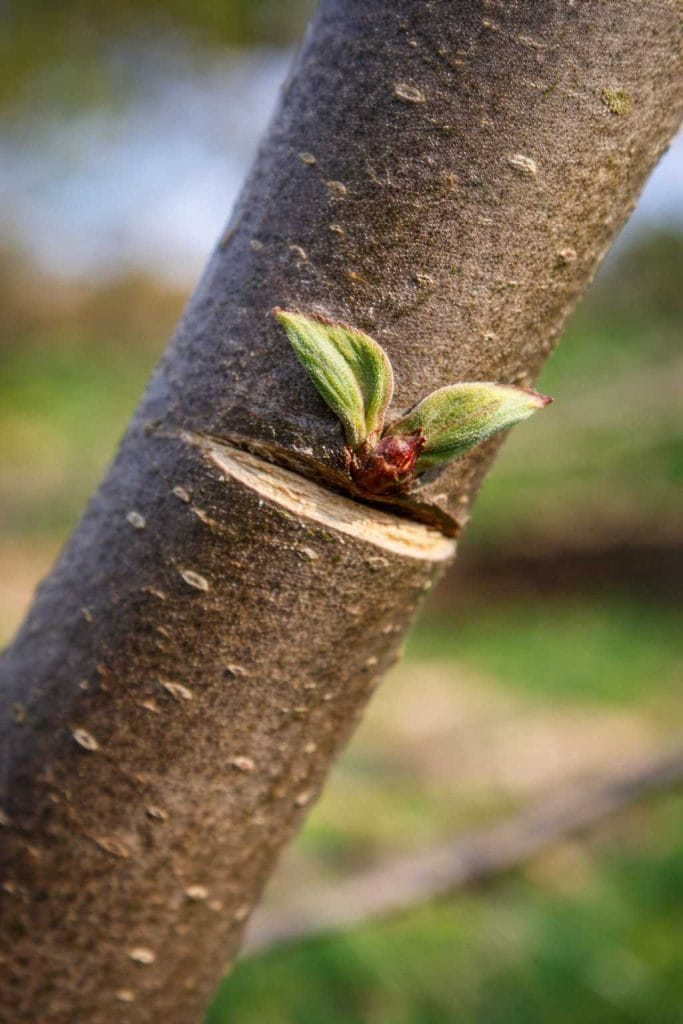
Nicking involves making a small cut below a bud. This technique tends to reduce the vigor of the shoot that develops or redirect growth patterns.
Purpose of Nicking
- Weakens overly vigorous buds
- Helps control excessive vertical growth
- Encourages formation of fruiting spurs instead of long shoots
- Balances tree structure
The cut below the bud slightly restricts nutrient and hormone flow upward, moderating growth intensity.
Timing
Dormant season – early spring
When to Use Nicking?
- On buds that tend to produce strong upright shoots
- When aiming for more fruiting spurs rather than vegetative growth
How to Perform Nicking?
- Locate the target bud.
- Make a small shallow cut just below the bud.
- Avoid deep or wide cuts that may damage vascular tissue excessively.
- Keep tools clean and sharp to prevent disease entry.
Effects on Plant Hormones
Nicking involves making a small cut just below the bud, which slightly restricts the upward movement of water, nutrients, and growth hormones such as auxins and gibberellins. This reduces excessive elongation and results in more controlled, less vigorous growth. Instead of producing long shoots, the bud is more likely to develop into a short branch or fruiting spur
Differences Between Notching and Nicking
| Feature | Notching | Nicking |
| Cut Position | Above the bud | Below the bud |
| Goal | Stimulate bud growth, Creates new branches | Reduce vigor/control growth, Encourages formation of fruiting spurs |
| Results | Increased lateral branching | More controlled or spur-like growth |
Precautions
- Deep cuts can introduce disease or weaken branches
- Overuse may stress the tree
- Not all buds respond equally
- Techniques require practice and careful timing
- Always sterilize tools.
- Avoid performing cuts during wet conditions to reduce infection risk.
Conclusion:
Notching and nicking are precise yet powerful techniques for shaping apple trees and improving productivity. By understanding plant hormones and bud behavior, growers can guide trees to develop strong frameworks, balanced growth, and efficient fruiting structures. When used thoughtfully—especially during early training stages—these small cuts can make a significant difference in long-term orchard health and yield.