


Introduction
The famous saying – “An Apple a day Keeps the Doctor Away” – does not hold true anymore.
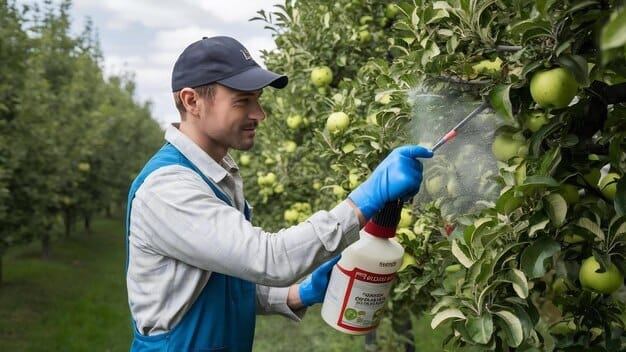
Apples, a staple fruit in many Indian households, conceal a disturbing reality. In the pursuit of producing a shining, well rounded, perfect apple fruit, growers have resorted to heavy chemical and pesticide use in apple farming. This indiscriminate practice, often adopted without due consideration, poses serious risks to human health, the environment, and all living organisms that depend on the orchard ecosystem.
Indian research reveals alarming facts:
– ICMR study (2020): 70% of apple samples from Himachal Pradesh, Jammu and Kashmir, and Uttarakhand contained pesticide residues exceeding safe limits.
– CSE report (2019): Indian apples contain higher pesticide residues than global standards.
Health Impacts: Exposure to these chemicals has devastating consequences:
- Cancer risk: Exposure to chlorpyrifos, glyphosate, and 2,4-D increases cancer risk.
- Neurological damage: Chlorpyrifos and neonicotinoids harm brain development and function.
- Reproductive issues: Exposure to pesticides affects fertility and fetal development.
- Environmental harm: Chemical runoff contaminates waterways, harming aquatic life.
What does PHI mean?
Pre-Harvest Interval (PHI) refers to the amount of time that must elapse between the last application of a pesticide and when the crop can be safely harvested. This waiting period is necessary to allow pesticide residues to degrade to a level deemed safe for human consumption. It is determined through residue studies and ensures that the pesticide levels on the fruit decline to within the Maximum Residue Limit (MRL) set by regulatory bodies.
Why PHI Matters in Apple Orchards?
1. Food Safety & Consumer Health
Apples are consumed fresh, often without peeling. Fungicides applied close to harvest can leave residues if the PHI is not respected. Following PHI ensures residue levels are safe for consumers.
2. Legal Compliance & Avoidance of Rejection
Indian markets and international buyers (EU, Middle East, etc.) strictly enforce MRLs. Harvesting before PHI can result in:
- Rejection at mandis
- Export bans
- Legal penalties
- Loss of orchard credibility
3. Optimizing Disease Management
Correct PHI timing helps orchardists plan their late-season sprays and ensure effective control of diseases such as scab, sooty blotch & flyspeck, powdery mildew, and post-harvest rots, without compromising harvest timing.
Factors Influencing PHI in Apple
- Fungicide chemistry: Contact fungicides degrade faster; systemic and translaminar types often require longer intervals.
- Environmental conditions: Sunlight, rainfall, humidity, and temperature influence residue breakdown.
- Application method: a) Higher spray volumes or oil-based products may extend residue persistence. b) Use of adjuvants: Stickers and spreaders enhance adhesion, extending residue persistence.
- Crop characteristics: a) Denser canopies may reduce degradation rate by reducing sunlight and air movement. b) Growth stage: Mature fruits accumulate residues differently compared to rapidly expanding fruits.
- Orchard Management Practices
a) Irrigation: Overhead irrigation may wash off residues. b) Pruning: Open canopies promote faster degradation due to better sunlight and airflow.
Best practices for Growers
- Plan your last spray wisely: Shift to low PHI fungicides during late season.
- Maintain updated spray records: Documenting spray dates help determining safe harvest windows and prevents accidental violations.
- Follow fungicide labels: Different brands may have slightly different PHIs even with the same active ingredient.
- Consider export requirements: Export buyers often have stricter MRLs than domestic markets—advance planning is essential.
Conclusion: While fungicides play an indispensable role in controlling economically important diseases, their benefits can only be realized when applied with a clear understanding of residue dynamics and harvest timing. Strategic selection of fungicides, proper spray scheduling, and accurate record-keeping—especially during the late season—allow orchardists to achieve optimal disease control without compromising fruit safety. Adhering to PHIs ensures that fruit reaching consumers is safe, meets all regulatory requirements, and maintains the premium quality expected from modern apple production systems.