


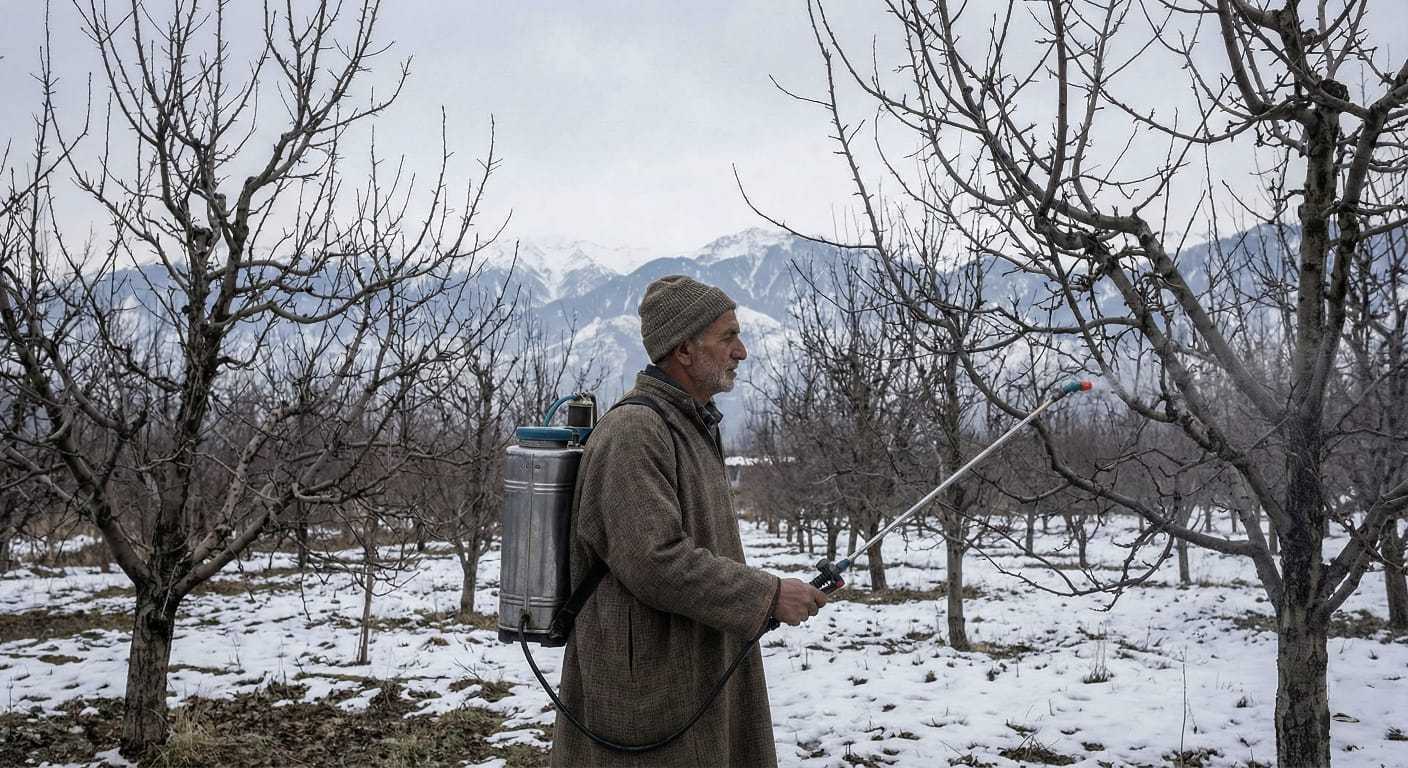
The dormant season in apple trees begins in late fall and continues until early spring, a period when the trees lose their leaves and greatly slow their growth. During this time, most insect pests also enter specialized overwintering stages that help them survive harsh winter conditions. These biological shifts limit the effectiveness of insecticide applications applied during full dormancy.
Why Dormant-Season Insecticide Applications Fail
Many apple pests do not remain active on the tree during winter. Instead, they transition into well-protected forms such as eggs, larvae, pupae, or stationary nymphs. These stages allows them to withstand low temperatures and resume activity only when warm weather returns. Because insects are sealed off and inactive, insecticides applied during dormancy rarely reach them.
Overwintering Stages of Major Apple Pests
Most apple pests overwinter in forms that shield them from chemical exposure:
- Scale insects (e.g., San Jose scale) persist as immobile nymphs tightly attached to twigs.
- European red mites overwinter as tiny, clustered eggs on bark, buds, and fruit spurs.
- Aphids lay shiny, hardened eggs on shoots that remain protected until spring.
- Leaf miners and other pests hide in bark crevices, beneath loose scales, or in soil and orchard debris.
Each of these forms offers structural protection that prevents insecticides from reaching or affecting the pest.
Physical Barriers That Limit Insecticide Penetration
Overwintering structures such as egg shells, scales, cocoons act as protective shields. These barriers block sprays from contacting the actual insect body. As a result, even well-applied dormant sprays fail to penetrate to where the pests are hiding and sealed in.
Reduced Metabolic Activity in Overwintering Pests
In winter, pests drastically slow or shut down feeding, movement, and respiration. Most insecticides depend on ingestion or active respiration to deliver a lethal dose. Because overwintering insects are metabolically inactive, they do not absorb or respond to toxins. Even systemic insecticides become ineffective, as dormant trees do not move sap and therefore cannot transport chemicals into tissues harboring pests.
Environmental Constraints on Insecticide Effectiveness
Cold winter conditions further reduce insecticide performance. Low temperatures hinder chemical activity and slow drying of spray materials. Meanwhile, pests remain concealed deep in bark cracks, beneath bud scales, or in soil—locations that sprays cannot reach regardless of application precision. These factors make dormant-season insecticide applications largely ineffective.
Role of Cultural Practices during Dormancy
Cultural methods become especially valuable during the dormant period because many pests overwinter on the tree or orchard floor. Practices such as pruning, sanitation, bark scraping, and orchard floor cleanup physically remove or destroy overwintering stages. This reduces pest pressure before spring, decreases reliance on chemical treatments, interrupts pest life cycles, preserves beneficial insects, and promotes healthier trees.
Conclusion
Effective pest management must therefore focus on timing applications when pests resume activity in early spring rather than during deep winter dormancy. By getting the timing and application right and seeking expert advice when needed, farmers can reduce the pest load. This strategic approach not only enhances crop protection but also contributes to more sustainable, resource-efficient agricultural practices